A Time for Seeking and a Time for Losing
Rabbi Alex Weissman
Rabbi Alex Weissman
The Hebrew month of Tishrei takes us through awe, repentance, freedom, harvest, uncertainty, and new beginnings. In this four-session class, we’ll explore the ancient roots and new buds that make up the growing and evolving traditions of Rosh HaShanah, Yom Kippur, Sukkot, and Sh’mini Atzeret/Simchat Torah. Each session will trace how the holiday has been received, reread, and remade across time and space. No prior background is needed, just curiosity about how ancient words keep finding new mouths.
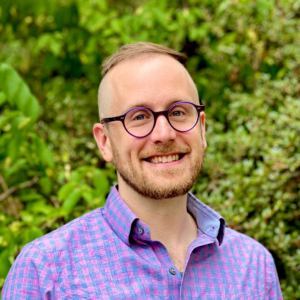
Rabbi Alex Weissman, RRC ’17 (he/him), serves as Director of Community Life and Mekhinah at RRC, where he teaches Mishnah, practical rabbinics, and Reconstructionism. He has previously served as Rabbi of Congregation Agudas Achim, Director of Organizing at T’ruah, and Senior Jewish Educator at Brown RISD Hillel.
Jewish and/or Democratic? On Judaism and Democracy in Israel
This course, surrounding Israel’s upcoming elections, will explore the relationship between Judaism and democracy in the modern State of Israel, from its founding to the present day. We will engage in in-depth study of key documents that have defined Israel’s Jewish and democratic elements, such as Israel’s Declaration of Independence and Basic Laws. We will consider contemporary questions and issues as well as current efforts to change the nature of Judaism and democracy in Israel, and what this all means for liberal Jewish denominations and Diaspora Jews. We will also discuss how issues of Judaism and democracy are playing out in Israel’s current elections and beyond.
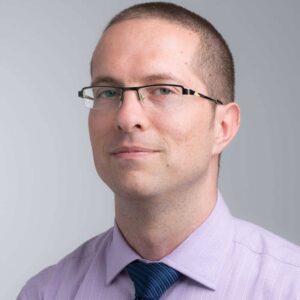
Elliot Vaisrub Glassenberg is an American-Canadian-Israeli Queer Jewish educator-activist whose work focuses on the intersection of Judaism and human rights. Originally from Chicago, Elliot holds a B.A. from McGill University, an M.A. in Jewish Education and an M.A. in Jewish Literature from the Jewish Theological Seminary. Since moving to Israel in 2011, Elliot has taught hundreds of groups from Israel and abroad and has volunteered and advocated for refugee rights, LGBTQ inclusion and other causes. Elliot currently serves as a senior educator at BINA: The Home of Israeli Judaism; as part of his work, he oversees the RRC-BINA Israel Summer Term on the ground. Elliot is also a student in the The Beit Midrash for Israeli Rabbis (by Hamidrasha at Oranim and Hartman Institute), a blogger at The Times of Israel and lives in Jaffa. Elliot is an affiliate faculty member at RRC.
Conflict and Community in the Ancient Beit Midrash
Rabbi Mira Wasserman, Ph.D., Vice President for Academic Affairs and Associate Professor of Rabbinic Literature
Rabbi Mira Wasserman, Ph.D., Vice President for Academic Affairs and Associate Professor of Rabbinic Literature
As depicted in the stories of the Talmud, gatherings of the early Rabbis were full of contention and conflict. In this course, we will engage in close readings of Talmudic narratives that focus on how early Rabbis navigated their differences. We will examine stories of political intrigue and power abuses as well as stories of conflict resolution and interpersonal reconciliation. What can these Talmudic narratives teach us about how to build communities across lines of disagreement in our own day?
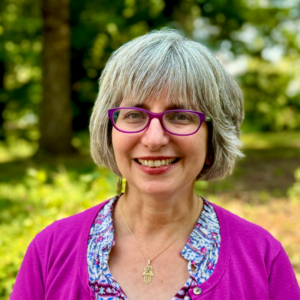
Rabbi Mira Wasserman, PhD, serves is Vice President for Academic Affairs at the Reconstructionist Rabbinical College, where she teaches classes on rabbinic texts and civilization. She is co-editor of the recently published Modern Jewish Ethics Since 1970 and author of Jews, Gentiles and Other Animals: The Talmud after the Humanities. She earned her honorary Doctor of Divinity at RRC in 2023. Her PhD is from the University of California, Berkeley.
Unpacking the Siddur
Nora Chernov
Nora Chernov
 The siddur is a beautiful and sometimes overwhelming product of thousands of years of Jewish thought and text that expresses the full range of human emotions.
In this course we will journey through the siddur and the structure of the service to better understand how it works. We’ll look at how the Jewish prayer book came to be, how it guides our practice of prayer through different emotional and theological moments in the service, and deepen our relationship with and knowledge of this sacred technology. This class will also focus on specific Reconstructionist innovation in liturgy as seen in Kol Haneshama.
Nora Chernov (she/her) is a Senior at the Reconstructionist Rabbinical College where she also serves as the Intern for Community Life and the Beit Midrash. She previously has served in rabbinic internship roles at Congregation Beth Israel of Media and Hillel at Temple University and holds a B.A. in Political Science from the Rochester Institute of Technology.
On the Road Again: Migration in the Torah (and beyond)
Elsie Stern, Ph.D., Associate Professor of Bible, RRC
Elsie Stern, Ph.D., Associate Professor of Bible, RRC
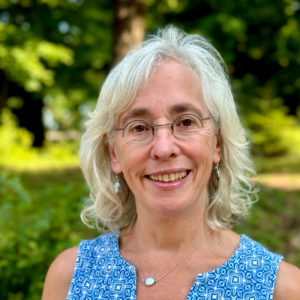
The Torah is full of stories of migration. In fact, Isaac is the only protagonist who never leaves the land of Canaan. In this class, we will explore representations of migration in the Torah (and a few prophetic texts) and discuss how these stories reflected and responded to historical experiences of migration (both forced and voluntary) in Ancient Israel and Judah. We will also explore the resonances and implications of the biblical migration stories for us today.
Elsie Stern’s (she/her) teaching and research focus on the ways in which Jews throughout the ages have accessed and experienced Torah. She teaches courses in biblical civilization, Tanakh and Hebrew, as well as courses that explore the evolution of core Jewish themes over time and courses that combine text study and practical skills. Stern is a firm believer in the Reconstructionist principle that Judaism is generated at the intersection of Torah and the Jewish people. She shines a spotlight on this intersection in her teaching and research.
Registration coming soon.
Sharing Scripture
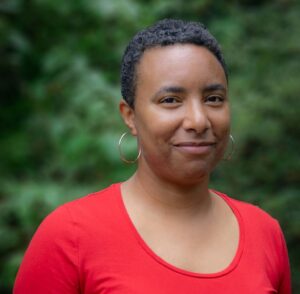
Amanda Beckenstein Mbuvi, Ph.D., Director of the Center for Jewish Ethics; Teaching Fellow, Race, Culture, and Jewish Ethics
Amanda Beckenstein Mbuvi, Ph.D., Director of the Center for Jewish Ethics; Teaching Fellow, Race, Culture, and Jewish Ethics
 Registration coming soon.
Embracing Peoplehood and Rejecting Chosenness: Reconstructionist Efforts to Balance Particularism and Universalism
Rabbi Deborah Waxman
Rabbi Deborah Waxman
A tension in Jewish thought between universalism (acting for the good of all the world) and particularism (prioritizing the Jewish people) is present as far back in the Hebrew Bible. The modern era, with Jews offered individual rights as citizen of nation-states, massively exacerbated that tension, and Zionism’s success in establishing Israel ratcheted it up another knot. Mordecai Kaplan and the circle gathered around him sought to balance this tension in many ways, including offering new conceptions for how to understand ourselves as Jews and as citizens of the world. We will examine two of their strategies—the concept of peoplehood and the rejection of the idea of Jews as the chosen people—and explore their resonance for our day.
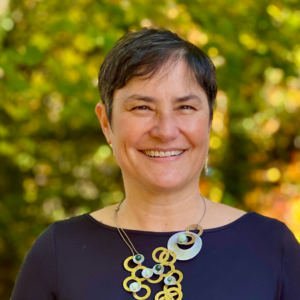
Rabbi Deborah Waxman, Ph.D., is president emerita of Reconstructing Judaism. The first woman rabbi to head a Jewish congregational union and a Jewish seminary, Waxman was the Reconstructionist movement’s leading voice in the public square from 2014-2026. She continues to draw on her training as a rabbi and a historian and her leadership experience to reflect on such topics as Jewish peoplehood and communal identity; religious authority in a democratic context; pluralism, diversity and equity; and resilience and meaning-making. She was ordained by the Reconstructionist Rabbinical College and received a Ph.D. in American Jewish history from Temple University.
Registration coming soon.
Three Emotions in Kabbalah: Anger, Shame, and Love/Fear
Joel Hecker, Professor of Jewish Mysticism
Joel Hecker, Professor of Jewish Mysticism
 Religious practice and experience call for engagement from the mind, body, and heart. For a long time, people studying kabbalah looked primarily at the technical theological systems that it built up, but more recently scholars have begun to think about the emotions that are summoned and evoked in the course of mystical engagement in Judaism. In this course, we will look at three different emotions that often carry negative valences to see how they are used by the kabbalists to harness, evoke, and animate action that will ultimately lead to greater harmony—social, internal, and within Divinity itself.
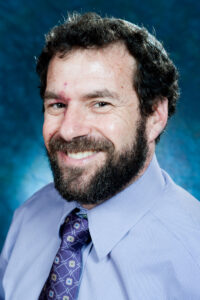
Joel Hecker is Professor Emeritus of Jewish Mysticism at the Reconstructionist Rabbinical College. He is the author of Mystical Bodies, Mystical Meals: Eating and Embodiment in Medieval Kabbalah; Volume 11 and (with Nathan Wolski) Volume 12 of The Zohar: Pritzker Edition; and co-editor of Emotion in the Jewish Mystical Tradition; as well as numerous articles on Kabbalah and Hasidut.
Registration coming soon.
Death and Dying: Rituals and Practices
Rabbi Rayna Grossman
Rabbi Rayna Grossman
 What happens when someone dies?” In this three-session course we will explore the practical answer to that question through Jewish texts, rituals and practices. Part foundation laying and part practical knowledge and skills, this course will cover topics like rituals for purification of the body, burial practices, mourning practices, and more.
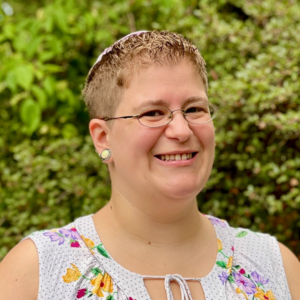
Rabbi Rayna Grossman, RRC ’17 (they/them), is the Director of Field Education at RRC where they teach in the practical rabbinics department. Previously, they were the Director of Religious Services at Lions Gate CCRC in Voorhees NJ, and they have an MSW from the University at Buffalo School of Social Work.
Registration coming soon.